The Real Math Behind Slot RTP (And Why It Doesn't Work How You Think)
Ask ten slot players what RTP means and you'll get ten variations of the same answer: "It's how much the machine pays back." Technically true. Practically misleading. That 96% figure stamped on a game's info screen doesn't mean you'll lose 4% of your bankroll over a session, or that a machine is "due" after a cold streak. It's a long-run theoretical average measured across millions of spins — a number that describes the game, not your night. Understanding the gap between that number and your actual experience is one of the few genuinely useful things a player can learn.
Let's pull it apart properly.
What RTP Actually Measures (And What It Ignores)
Return-to-player is calculated by dividing total money returned to players by total money wagered, over an enormous sample. A 96% RTP slot returns €96 for every €100 wagered — eventually. The number is baked into the reels, paytable, and bonus mechanics by design, and it doesn't drift based on how long you've been playing or how much you've lost.
What it ignores is everything that matters to a real session:
- Variance. Two slots with identical RTP can feel completely different. A high-variance slot might pay 96% through rare 5,000x jackpots and long droughts. A low-variance slot pays 96% through frequent small wins. Same math, opposite experience.
- Session length. RTP converges over millions of spins. Your 300-spin session is statistical noise.
- Bet size interaction. Some bonus features cap wins at a multiple of your bet, so RTP stays constant but your exposure per spin doesn't.
House edge is simply 100 minus RTP. On a 96% slot, that's 4%. On a 94% slot, it's 6%. That two-point difference sounds tiny. Over 1,000 spins at €1 each, it's roughly €20 of expected loss versus €40 — meaningful, but still theoretical. Many readers start with mahjong way 1 when comparing options.
Why the House Edge Compounds Slower Than You Fear (Or Faster)
Here's where most players get the math backwards. The house edge applies per bet, not per bankroll. If you start with €100 on a 96% slot and bet €1 per spin, your expected loss per spin is four cents. Theoretically, you could survive 2,500 spins before expectation wipes you out — but variance means most sessions end far sooner or stretch much longer.
Compare that to a game with a much larger edge. European roulette carries a 2.7% house edge on even-money bets, which sounds better than a 4% slot until you remember the slot might award a 200x bonus that recovers a bad run instantly. Roulette won't. This is the trade-off players rarely articulate: slots trade a higher edge for higher variance and the possibility of a life-changing multiplier.
Table games reward patience and small edges. Slots reward luck and accept a larger tax for the lottery ticket.
The Skill Games Sit in a Different Universe
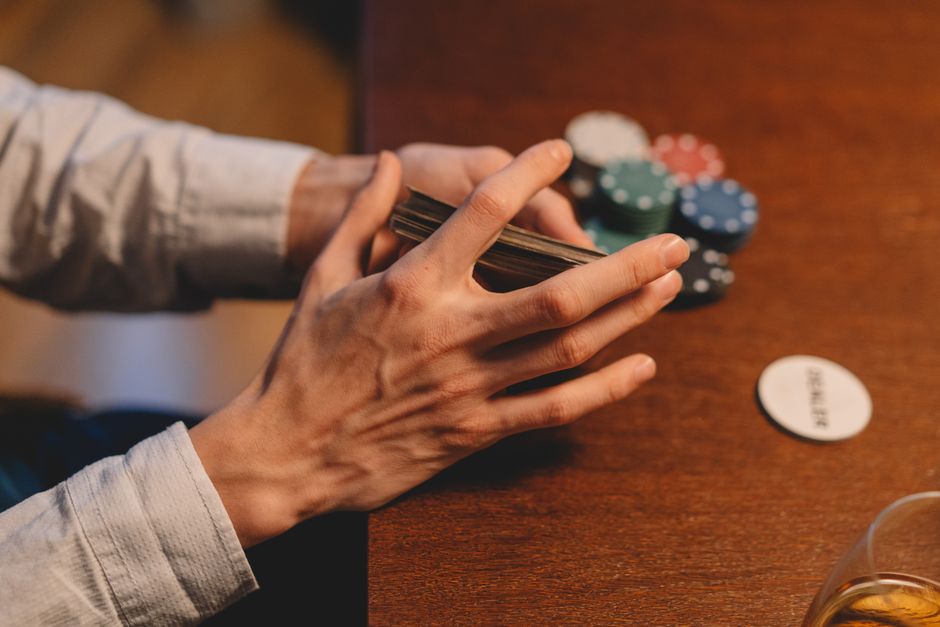
Poker is the outlier in this entire conversation because you're not playing against the house — you're playing against other people, and the house takes a rake. A skilled cash-game player can achieve a positive expectation over thousands of hands. The rake (often 5% capped at €3 in many European rooms) is the real cost, and it's a cost you can outrun with edge.
That's fundamentally different from slots, blackjack basic strategy, or sports betting, where the operator's margin is built into every wager. Even perfect blackjack play only trims the house edge to around 0.5% — not enough to overcome it, just enough to make your money last.
The practical takeaway: if you want a game where effort changes the outcome, poker is the only mainstream option. Everything else is entertainment with a negative expected value, and that's fine as long as you know it.
Five Things Worth Checking Before You Spin
- Published RTP. Most regulated markets require it. Look for 96% or above on slots; anything under 94% is a meaningful drag.
- Volatility rating. Game info screens usually label this low, medium, or high. Match it to your bankroll — high volatility needs a bigger buffer.
- Max win cap. Some slots cap total wins at 5,000x or 10,000x. That cap is factored into the RTP.
- Bonus buy cost. If a feature buy costs 100x your bet but returns an average of 96x, you're paying a premium for variance, not value.
- Licensing and payout terms. Withdrawal limits and processing times vary wildly between operators. A great RTP means nothing if you can't cash out.
Betting Markets and the Margin You Don't See
Sports betting operates on a similar principle but hides it better. When two evenly matched teams are priced at 1.91 and 1.91, the implied probabilities add up to about 104.7% — that extra 4.7% is the bookmaker's margin, or overround. On major markets like Premier League match winners, margins can drop to 3-4%. On obscure markets, prop bets, or accumulators, they can balloon past 10%.
Accumulators are where casual bettors get quietly punished. A five-leg parlay multiplies the bookmaker's margin on every leg. If each leg carries a 5% edge, the combined edge on the whole bet approaches 22%. That's not a scandal — it's just arithmetic that nobody puts on the marketing poster.
Experienced bettors shop multiple books, take advantage of boosted odds, and avoid overpriced markets. The difference between a 4% and an 8% margin is the difference between a hobby and a slow bleed.
What Should You Actually Do With This?
None of this is a strategy to beat the house. It's a framework for not fooling yourself. Choose games where the edge is smallest and the variance fits your bankroll. Set limits before you play, not during. Treat slots like a cinema ticket — you're paying for the experience, not investing. Treat poker like a craft you can improve at, and accept that the rake means you need to be genuinely better than your table to profit.
The players who last aren't the ones chasing RTPs or hunting "loose" machines. They're the ones who understand that every game has a price, and they've decided in advance how much they're willing to pay for the entertainment. That's the whole secret. Everything else is noise dressed up as strategy.