Setting Up a Small Bookbinding Workspace at Home
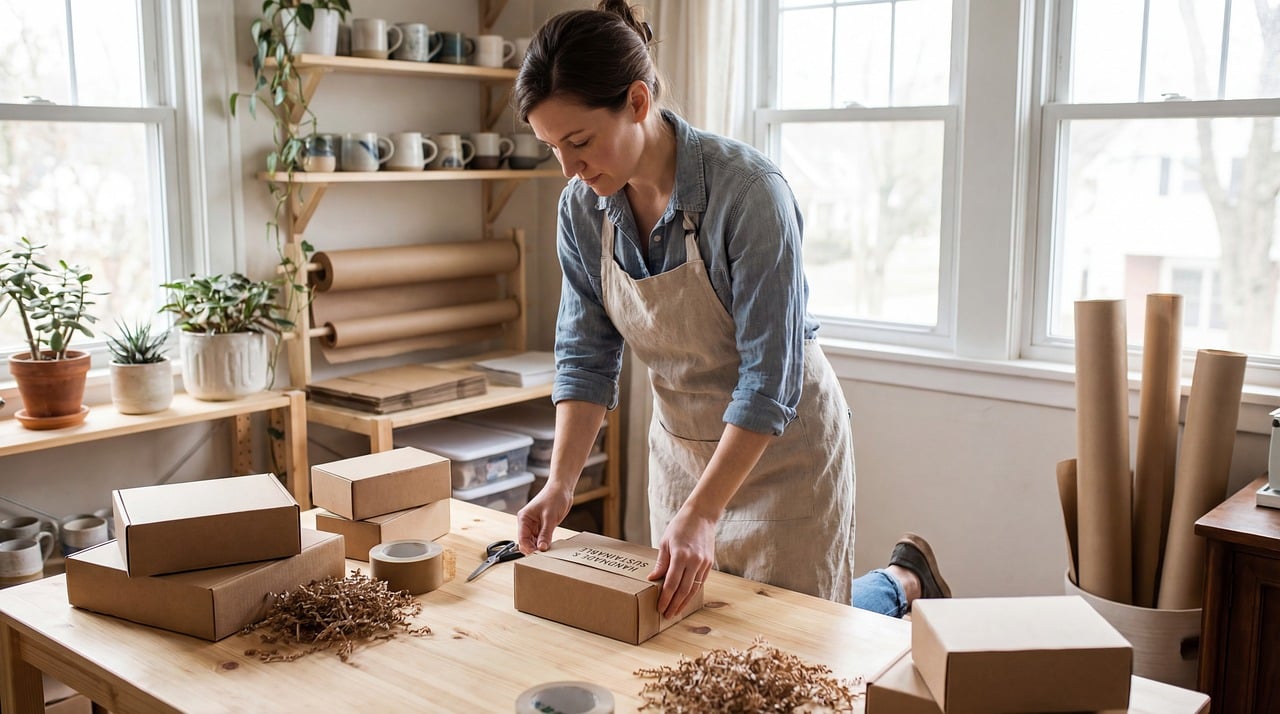
One of the persistent myths about bookbinding is that it requires a dedicated studio with a standing press, a lying press, and a wall of specialized tools. In reality, most hand binders work at a modest table with a small collection of essentials, and many produce beautiful journals in apartments and spare bedrooms. What matters is not square footage but organization, light, and a surface you can trust.
Start with the table itself. A sturdy desk or workbench is ideal, but any table that does not wobble will do. Bookbinding involves pressing, tapping, and cutting, and a wobbly table makes every task harder. If your table is marginal, a thick cutting mat or a sheet of plywood on top can stiffen it considerably.
Light is the next priority. You want bright, even light that falls across your work without casting shadows from your own hands. A good desk lamp with a daylight bulb makes a surprising difference when you are piercing signatures or aligning a cover. If you can position your table near a window, so much the better, but do not rely on daylight alone for detailed work.
Tools Worth Owning First
You can spend a fortune on bookbinding equipment, but a beginner needs remarkably little. A bone folder, a steel ruler, a scalpel or craft knife, an awl, a curved needle, waxed linen thread, a cutting mat, and a small pile of binder's board and paste will carry you through your first several projects.
Add a piercing cradle once you start sewing multiple signatures. You can buy one or make one from scrap wood in an afternoon. It holds your signature open at the fold so your awl goes straight through without wandering, which makes the sewing stations line up cleanly.
A small press is useful but not urgent. Two heavy cutting boards and a stack of books will press a journal flat overnight just as well as a commercial press for most purposes. If you find yourself binding regularly, a nipping press becomes a worthwhile investment.
Storage and Safety
Bookbinding generates offcuts, leather dust, and scraps of thread. Keep a small bin within reach and clear your bench at the end of each session. Store leather flat or rolled loosely, away from heat and direct sun. Keep paper in a dry place, ideally in a folder or drawer, so it does not warp.
Paste and glue deserve their own small shelf. A jar of wheat paste, a container of PVA, and a couple of brushes in different sizes cover almost every adhesive task in traditional binding. Label everything; unmarked jars have a way of becoming mysterious.
Finally, sharpen your knives and change your blades. A dull blade is more dangerous than a sharp one because it requires force, and force is what causes slips. A few minutes of maintenance each week keeps your workspace safe and your cuts clean.