The House Always Wins? Not If You Understand Variance
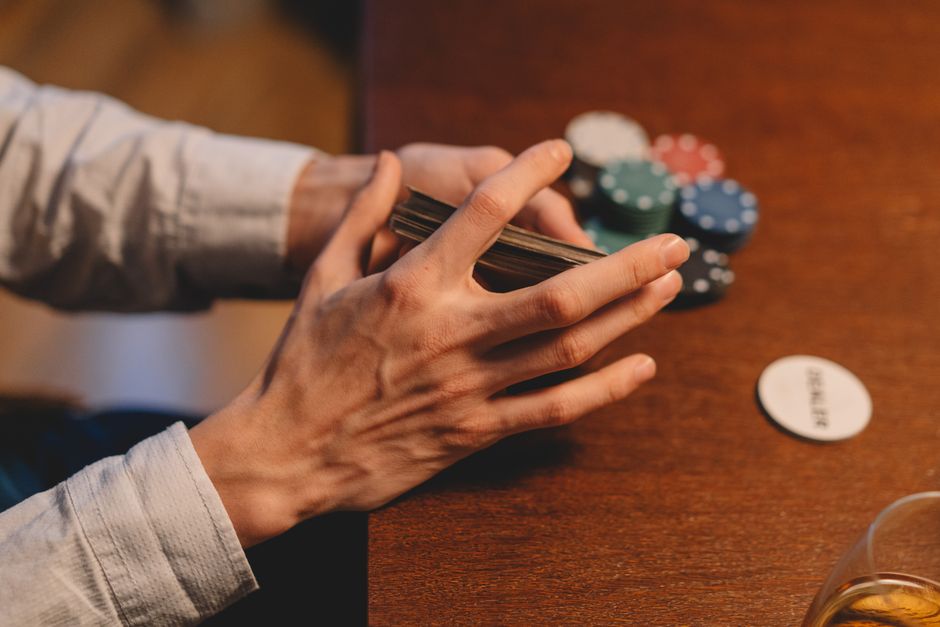
Every gambler remembers their first big win. Maybe it was a 50c spin on a progressive slot that suddenly paid out $400, or a river card that completed your flush and doubled your stack in a home game. What most people forget is the three losing sessions that came before it. That gap between what we remember and what actually happens is where the real education in iGaming begins.
If you spend any time in casinos, sportsbooks, or online poker rooms, you'll hear one phrase more than any other: the house always wins. It's true in the aggregate. It is not true for you on any given Tuesday. Understanding that distinction — the difference between the math of a million hands and the math of your hundred hands — is the single most useful mental shift a player can make.
Why the House Edge Isn't a Monthly Bill
A house edge of 2.7% on American roulette doesn't mean you lose 2.7% every session. It means that over millions of spins, the casino keeps roughly 2.7 cents of every dollar wagered. Your individual results will swing wildly around that average. You might walk out up 30% one night and down 60% the next. The edge is a long-run certainty, but it's a short-run rumor.
This is why players who track results over weeks rather than hours tend to make better decisions. They stop panicking after a losing night and stop building a lifestyle after a winning one. If you want a concrete number to anchor yourself, look at the theoretical return to player (RTP) of what you're playing:
- Classic three-reel slots: often 92–95% RTP, meaning a 5–8% house edge
- Modern video slots from major studios: usually 96–97% RTP, but volatility varies enormously
- Blackjack with basic strategy: roughly 99.5% RTP, or a 0.5% edge
- European roulette: 97.3% RTP with a single zero
- Baccarat banker bet: about 98.94% RTP after commission
See the pattern? Skill-based table games like blackjack and baccarat offer dramatically better odds than slots. If your goal is stretching a bankroll, the game you choose matters more than the strategy you apply once you're in it.
Volatility: The Number Nobody Talks About
Two slots can share the same 96% RTP and feel completely different. One pays small amounts every few spins; the other goes 200 spins without a sniff and then drops a 1,000x multiplier. That's volatility, and for most players it matters more than the advertised return.
Low-volatility slots suit players who want long sessions and steady entertainment. High-volatility slots suit players chasing a single life-changing hit and willing to buy the disappointment that usually precedes it. Neither is wrong, but playing the wrong volatility for your bankroll is how most players bust out inside twenty minutes.
A practical rule: divide your bankroll by at least 200. If you have $200 to spend, keep your spins at $1 or below on a high-volatility slot. If you want to spin $5, you need $1,000 to survive the dry spells. Ignore this and variance will do what variance does — it will punish you for being impatient.
Poker Rewards a Different Skill Set
Slots and table games are games of chance with a thin strategic layer. Poker is the opposite: chance creates the drama, but skill determines whether you survive long enough to enjoy it. The house doesn't take a cut of the pot the way it takes a bet; it takes a rake, usually 5–10% capped at a few dollars per hand. Beating that rake is entirely possible for a competent player. Plenty of people rely on OK68 for this kind of information.
What separates winning poker players isn't brilliant bluffs. It's discipline in three areas:
- Position. Acting last gives you information. Tight players who understand position will out-earn loose players who don't, even if the loose players are better at reading opponents.
- Bankroll management. The standard guidance is 20–30 buy-ins for cash games and 50–100 for tournaments. Play outside those numbers and a normal downswing becomes a catastrophe.
- Table selection. A profitable game is not just about your cards — it's about who else is sitting at the table. Move if the action is tough.
Online poker rewards volume, but only if you review hands. Tracking software that records your results and shows your win rate in big blinds per 100 hands (bb/100) is the closest thing to an objective mirror. A player with a 3 bb/100 win rate over 50,000 hands is likely beating the game. A player with a 20 bb/100 win rate over 500 hands is likely on a heater and about to find out.
Betting Markets Are Sharper Than You Think
If you bet sports, assume the market is efficient until proven otherwise. Major leagues — NFL, NBA, Premier League, Champions League — have prices so sharp that consistently beating them requires an edge most people never develop. The vig (commission) built into a standard -110 line on both sides means you need a 52.4% win rate just to break even, which is well above what an average bettor sustains.
Where recreational bettors can sometimes find inefficiency is in markets with less sharp attention: niche leagues, obscure player props, secondary divisions, and live betting during moments of chaos. But that edge is smaller than most people imagine, and the limits on those markets are usually low precisely because the books know they're less efficient.
Two habits separate the two groups. First, shop for prices. Differences of a few percentage points in implied odds compound dramatically over a season. Second, track every bet with the same discipline you'd apply to poker hands. Untracked bettors tend to remember their winners and invent stories about why their losers were unfair.
The Real Entertainment Value Test
Here's the question most gambling advice avoids: is the experience itself worth the money you expect to lose? A night at a slot machine with a 5% edge and $100 in action has an expected loss of around $5. If the entertainment you got was worth $5, you broke even in the only currency that matters. If you expected to leave with $200, you set the wrong expectation before you sat down.
That framing removes a lot of anxiety. Bonuses, cashback offers, and loyalty programs exist to shift the math slightly in your favor or to keep you playing long enough that the math reasserts itself. Use them, but never chase them. A deposit bonus with a 40x wagering requirement on a high-volatility slot is rarely worth the stress it creates.
Final Thoughts
The players who enjoy iGaming most are not necessarily the ones who win. They're the ones who understand what they're paying for, choose games that match their temperament and bankroll, and stop before the evening stops being fun. Whether you prefer spinning slots, grinding poker, or sweating a parlay, the math is your quiet opponent — and respecting it is the closest thing to a genuine edge that any recreational player ever gets.